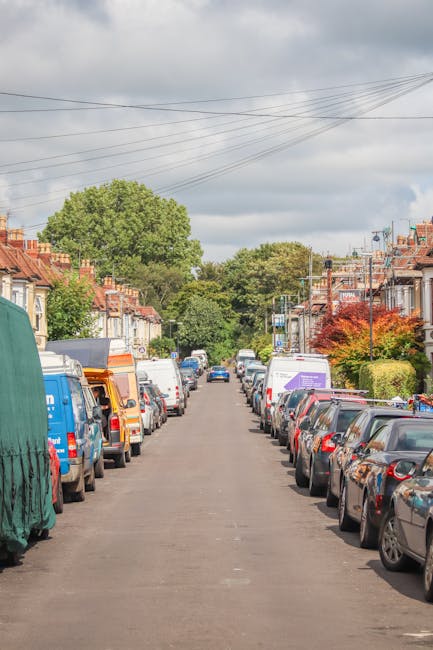
Haringey Council Permit Rules for Moving Vans in N17: A Practical Guide for a Smoother Move
If you are moving in or out of N17, the last thing you want is a van sitting in the wrong place, a stressed driver, or a knock on the window from a parking enforcement officer. The reality is simple: Haringey Council Permit Rules for Moving Vans in N17 can affect how easily your move goes, especially on busy streets, near flats, or where parking is already tight. This guide breaks everything down in plain English so you can plan properly, avoid common mistakes, and keep moving day calm. Truth be told, a little planning here saves a lot of noise later.
Why Haringey Council Permit Rules for Moving Vans in N17 Matters
N17 includes a mix of terraced streets, estates, side roads, busy main routes, and areas where kerb space disappears quickly. That means a moving van can't always just pull up and unload without consequences. In practice, the permit rules matter because they help manage road use, keep access open, and reduce the risk of delays or penalties.
For many house moves, the biggest issue is not the furniture. It is parking. Can the van stop close enough to the front door? Will the driver be forced to circle the block? Is there a loading bay, a yellow line, or a restricted zone to think about? If you are moving from a flat, coordinating access becomes even more important. You may find it useful to read the best routes for apartment moves near Tottenham Hale Station if your move involves tight access or shared entrances.
Permits are not just red tape. They are part of moving safely and legally. A van that is parked badly can block traffic, cause complaints from neighbours, or make a simple job drag on for hours. And let's face it, nobody wants to carry a sofa down a damp pavement twice because the first unloading spot wasn't workable.
For local moves in N17, permit planning also affects timing. School runs, commuter traffic, and peak road use can all make a short move feel oddly complicated. A permit won't solve every issue, but it does remove one of the most avoidable headaches.
How Haringey Council Permit Rules for Moving Vans in N17 Works
In broad terms, the permit process is about ensuring your moving van can use a space legally for loading or unloading. Depending on the street, the type of parking available, and how long the van needs to stay, you may need a resident permit, visitor permission, loading allowance, or a specific bay arrangement. The exact position will depend on the street and the council's parking controls.
Here is the practical way to think about it: if the van is stopping briefly in a place where parking is allowed for loading, that may be enough. If it needs to remain parked longer, or if the street is controlled, you may need formal permission. In N17, that often becomes relevant around flats, dense residential streets, and areas where access is limited by existing parking demand.
Movers also need to consider the difference between parking and loading. Those are not always treated the same way. A short stop to lift boxes may be acceptable in one place, while a longer stay with a crew and trolleys could require something more formal. If the move is complicated, a professional approach helps. Our services overview gives a useful sense of how a well-planned move is usually organised.
Another point people miss: the van itself matters. A small removal van may be easier to place than a larger vehicle, especially on narrower roads. A simple van choice can reduce permit pressure, speed up loading, and make your move feel less like a traffic puzzle.
If you are dealing with a bigger family relocation or multiple bulky items, consider whether the access plan and parking layout actually suit the volume you are moving. Sometimes the issue is not the permit at all, but the size of the vehicle chosen for the job.
Key Benefits and Practical Advantages
Getting the permit side sorted early gives you more than legal peace of mind. It improves the entire moving experience in a very practical way.
- Less risk of fines or challenge letters if the van needs to stop in a controlled area.
- Shorter loading and unloading times because the driver can park closer to the property.
- Better coordination with neighbours and residents, especially in shared blocks or narrow streets.
- Reduced stress on moving day because the parking decision has already been made.
- Safer handling of heavy items when the team does not have to carry furniture too far.
There is also a less obvious benefit: good planning makes the whole move feel more professional. If you are using a man with a van in Tottenham Hale, for example, sensible parking and access planning often makes the service faster and more cost-effective. The driver spends less time hunting for space, and you spend less time watching the clock.
From a customer point of view, this can be the difference between a move that feels steady and one that feels frantic. Small detail, big effect.
Who This Is For and When It Makes Sense
This topic matters to anyone moving with a van in N17, but some people need to think about it more than others.
Home movers in flats and maisonettes
If you live in a block with shared access, permits or loading permissions can be especially important. Lift access, entry codes, stairwells, and short parking windows all come into play. A good example is a flat move where the van must stay close to the building while furniture is carried in or out.
House movers on busy residential roads
Even when you are in a house, the street may have controlled parking, resident bays, or limited space. A van can quickly become a nuisance if it blocks driveways or forces other drivers to reverse awkwardly. That is when the permit side becomes less optional and more essential.
Students and short-notice movers
Student moves often happen on tight timelines, sometimes on the same day as key handovers or moving-out deadlines. If you are planning a quicker move, take a look at student removals in Tottenham Hale and same-day removals support where speed and access both matter.
Office and business moves
Businesses moving equipment, stock, or desks in and out of N17 often need more structured parking planning. A van arriving late because it had nowhere to stop can cause a whole chain reaction. If that sounds familiar, you may also benefit from the planning ideas in office removals in Tottenham Hale.
When does it make sense to think about a permit? Usually the moment you realise the van may not have a safe, legal, close-by place to stop. That is the trigger. Not after it arrives. Before.
Step-by-Step Guidance
Here is a clean, practical way to approach moving van permissions in N17 without overcomplicating it.
- Check your street setup early. Look at whether the road has permit bays, loading restrictions, yellow lines, or time-limited parking.
- Estimate the move size. One studio flat and one four-bedroom house are very different in parking and timing terms.
- Decide what type of vehicle is needed. A compact van may fit where a larger vehicle would struggle.
- Identify the likely loading point. Think in terms of the shortest safe carrying distance from van to door.
- Confirm whether permission is needed. If in doubt, check the council's current process or ask the mover to advise based on experience.
- Build in a time buffer. Give yourself breathing room for delays, lift access, traffic, or awkward furniture.
- Brief the driver and any helpers. Everyone should know where the van is likely to stop and what the backup plan is.
- Keep documents and contact details ready. That includes booking confirmations, access notes, and property instructions.
One useful habit is to walk the route from van parking spot to front door before moving day if you can. It takes five minutes and can reveal a lot: a low branch, a step nobody mentioned, a gate that only opens halfway, or a narrow corner that looks innocent until you are holding a wardrobe. Small things, but they matter.
If you are still early in planning, this stress-free moving guide pairs well with permit planning because it helps you line up logistics before the boxes stack up everywhere.
Expert Tips for Better Results
After plenty of local moves, a few habits keep proving their worth.
- Book access planning before packing peaks. When the boxes are everywhere, it becomes harder to think clearly.
- Use smaller loads if the street is awkward. Two manageable trips can beat one impossible one.
- Choose the earliest sensible slot. Roads are often calmer in the morning, especially in residential areas.
- Label the heavy, awkward, and fragile items clearly. That speeds up unloading and reduces confusion on the pavement.
- Protect neighbours and passers-by. Keep pathways clear; nobody appreciates a mattress balancing act in the drizzle.
- Think about lift access and carrying distance together. A good parking spot can save more time than a faster pack-up.
If your move involves heavy items like a piano or a bulky sideboard, parking close matters even more. A few extra metres can become a real problem. For those jobs, specialist handling is usually the better choice, and our piano removals service explains why specialist access planning is so important.
There is a certain relief in getting this right. The van arrives, the door opens, and the job just starts. No drama. Lovely, really.
Common Mistakes to Avoid
Most moving problems around permits and parking are predictable. That is the good news. The bad news is that they are still very easy to repeat.
- Leaving parking decisions until the morning of the move. That is when mistakes turn expensive.
- Assuming a van can stop anywhere for "just a minute". Not always true, especially on controlled roads.
- Forgetting that flats and estate roads often have different access rules. One entrance may be easy; another may be blocked or restricted.
- Booking a vehicle that is too large for the street. The bigger van is not always the better van.
- Not checking where the crew will wait if parking is delayed. That can lead to confusion and wasted time.
- Ignoring lift timings, concierge rules, or building instructions. These can matter just as much as the road outside.
Another common issue is underestimating how long the unload will take. Even a tidy one-bedroom move can slow down if the route from van to property is awkward. If you are packing now, advanced packing strategies can help reduce the number of trips you need to make.
And yes, one more thing: do not rely on memory alone. Moving day brain is real. It is not your best brain.
Tools, Resources and Recommendations
You do not need a giant toolkit to manage this properly. A few practical items and sensible habits go a long way.
- Printed or digital move plan with access notes, arrival time, and contact details.
- Phone with battery charge for driver updates, building access, and last-minute direction changes.
- Measuring tape to confirm whether larger furniture will fit through doors, hallways, or lifts.
- Protective covers and blankets for furniture moved over longer pavement distances.
- Labels and colour tags to speed up sorting at the property.
- Reusable crates or sturdy boxes for heavier items that need better structure.
For packing and transport support, these pages are especially useful: packing and boxes in Tottenham Hale, removal van options, and removals in Tottenham Hale if you want a fuller view of what a move can involve.
For bulky furniture, storage, or awkward handling, it can also help to think ahead about temporary storage. That matters more than people expect when permit timing is tight. A van can't wait forever, after all.
Law, Compliance, Standards, or Best Practice
This is one of those areas where it is sensible to be cautious and practical. Parking, loading, and moving van use are affected by local traffic controls, signage, and the street layout. The precise rules can change depending on the exact location and the type of bay or restriction in place, so avoid guessing.
Good compliance means three things:
- Checking the street conditions in advance rather than assuming parking will be available.
- Following any permit, loading, or waiting requirements that apply to the road or property.
- Using safe moving practice so people, vehicles, and property are protected during the job.
Best practice also includes building in enough time. A rushed move is when people cut corners, block driveways, or make shaky decisions. A calmer move is usually a safer one. That is especially true in busy parts of N17 where roads can be unforgiving.
From a professional point of view, a mover should understand how parking affects the moving sequence, the risk of damage, and the need to protect both the customer's property and the public highway. If you want to understand more about how that care is handled, take a look at insurance and safety and health and safety policy.
The short version? Follow the rules, respect the street, and do not improvise when the pavement looks convenient. That usually ends badly.
Options, Methods, or Comparison Table
There is more than one way to handle moving-van access in N17. The right choice depends on your street, your property, and the size of the move.
| Approach | Best for | Advantages | Trade-offs |
|---|---|---|---|
| Short loading stop | Small moves on quieter streets | Quick, simple, often less paperwork | Not suitable where parking is restricted or the load is large |
| Permit-managed parking | Controlled roads and longer loading periods | More certainty and better access | Requires advance planning and checking the correct process |
| Smaller van with multiple trips | Narrow streets or tricky access | Easier to position and manoeuvre | Can take longer overall |
| Specialist moving support | Large, fragile, or awkward items | Better handling and safer loading | Usually needs more coordination and may cost more |
In real life, the "best" option is often a combination. For instance, a small flat move on a side street may work perfectly with a compact van and short loading stop, while a family home on a busy road might need more formal access planning. There is no single trick that suits every move, annoyingly enough.
Case Study or Real-World Example
Here is a realistic N17-style scenario.
A couple is moving from a second-floor flat near a busy road into a terraced house nearby. Their first instinct is to book a larger van so everything can go in one trip. Sensible enough on paper. But the street outside the flat is tight, parking is limited, and the only nearby spaces are shared with neighbours and commuters.
Instead of forcing the biggest vehicle possible, they choose a more compact van and plan a loading window early in the morning. They also make sure their boxes are grouped by room so the unloading is quicker. The move ends up taking a little longer than the first plan, but the van sits closer to the entrance, the carry distance is shorter, and nobody has to dodge traffic while carrying a mirror or a chest of drawers.
What made the difference? Not magic. Just a better fit between vehicle choice, parking reality, and the street environment. If they had ignored those details, the day would probably have been messier, louder, and much less pleasant.
For a move like that, it can be worth comparing a few service styles too, such as man and van support versus a fuller house removals service. The right option is the one that fits the access, not just the inventory list.
Practical Checklist
Use this as a last-minute sanity check before moving day.
- Confirm the moving date and arrival time.
- Check whether the street has parking control, loading bays, or yellow lines.
- Decide where the van will stop and who will guide it in.
- Measure large items and note any tight corners or stairs.
- Make sure access codes, keys, or entry instructions are ready.
- Keep the phone charged and available.
- Separate fragile items from heavy items.
- Prepare a backup plan if the first parking spot is not available.
- Tell neighbours if the move may temporarily affect the street.
- Keep walkways clear for safe carrying.
If you are still sorting the contents of the move, this is a good moment to read organising and decluttering for a smooth relocation. Fewer items usually means fewer parking headaches. Simple as that.
Conclusion
Haringey Council Permit Rules for Moving Vans in N17 are really about one thing: making a move work in the real world. Streets are busy, space is limited, and not every property offers easy kerbside access. When you plan the parking and permit side properly, everything else becomes easier - loading, carrying, timing, and even your nerves.
Most moving-day problems can be softened before they start. A bit of checking, a bit of judgement, and a bit of local awareness go a long way. If you take one thing from this guide, let it be this: do not leave van access to chance. Plan it, confirm it, and then move on with your day.
And if the move still feels like a lot, that is normal. It really is. One step at a time, and the whole thing becomes much more manageable.
Get a free quote today and see how much you can save.
Frequently Asked Questions
Do I always need a permit for a moving van in N17?
Not always. It depends on where the van needs to stop, how long it will be there, and whether the street has parking restrictions. Some moves can be handled with short loading or unloading stops, while others need formal permission.
What is the difference between loading and parking?
Loading usually means stopping briefly to move items in or out of the property. Parking means leaving the vehicle in place for a longer period. In controlled streets, that distinction matters a lot.
Can a small van avoid permit issues?
Sometimes, yes. Smaller vans are easier to place on narrow streets and may reduce the time needed for loading. But a small van does not automatically remove permit requirements if the road itself is controlled.
How far in advance should I sort out access and parking?
Ideally as soon as your move date is fixed. If your street is busy or your property has limited access, leaving it until the last minute is asking for trouble. A few days early is better than a frantic morning.
What if my building has its own rules as well?
Then you need to follow both sets of instructions. Building access rules, lift booking slots, concierge arrangements, and council parking controls can all affect the move. One does not replace the other.
Are permits more important for flats than houses?
Usually, yes. Flats often come with shared entrances, fewer parking spaces, and more complicated access. That said, some houses on controlled roads can be just as tricky.
What happens if the van cannot park close to the property?
The crew may need to carry items a longer distance, which slows the move and increases the physical effort. In some cases, it may be worth changing the vehicle size or adjusting the loading plan.
Is it worth using a professional moving service for a permit-sensitive move?
Often, yes. A good mover understands access issues, vehicle choice, and timing. That practical experience can save a lot of stress, especially on streets where parking is tight.
Can I combine moving day with rubbish disposal?
You can, but be careful. Bulky waste and removals should not be mixed casually unless you have a clear plan. For a useful overview, see bulky waste options in Tottenham Hale.
How do I keep the move calm if parking is uncertain?
Use a backup plan. Pick a secondary stopping point, allow extra time, keep your boxes grouped, and make sure someone is ready to guide the driver. Calm usually comes from preparation, not luck.
What should I do if I am moving at short notice?
Focus on the essentials first: vehicle size, access route, parking space, and loading order. If time is tight, a same-day or urgent moving option may help. You can also review last-minute moving help in N17 for practical ideas.
Where can I learn more about the mover's standards and protections?
It helps to check how the company handles safety, complaints, payments, and policies. Useful starting points include about the team, pricing and quotes, and insurance and safety.